Galilee road trip part 2 : setting up camp

Parts 1 2 3 – more soon…

Sometimes known as Lake Tiberias, Lake Kinneret, but its probably best known to most people as the Sea of Galilee.

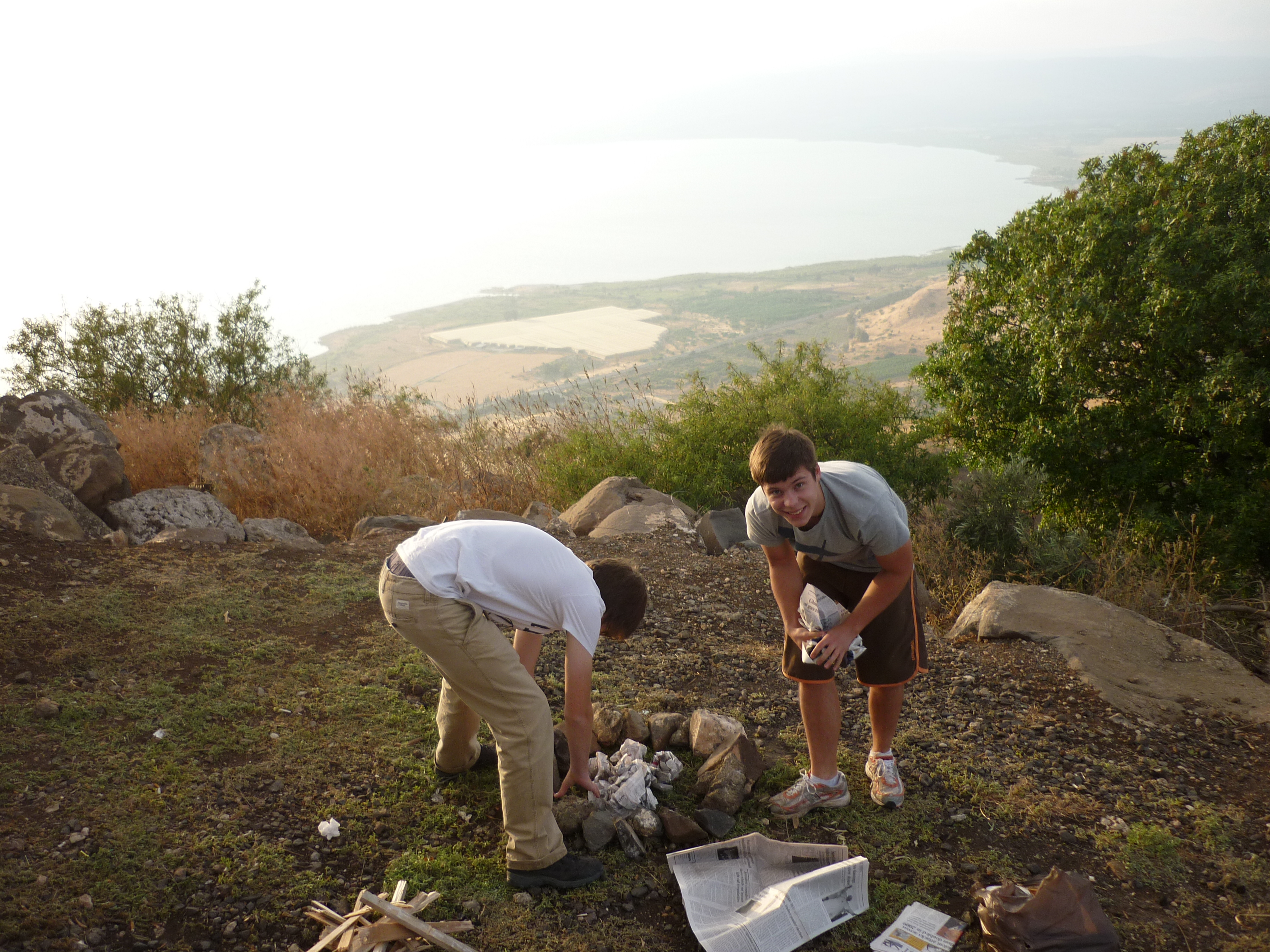
After some driving around and exploring on foot on some picnic sites over looking the lake, we eventually settled on this one.

This would be wonderful enough if this was just a regular national park, but – this is Jesus’s backyard, a lake that was the place for many miracles, feeding the 5,000, turning water into wine, putting the demon from a man into the herd of swine (who fell to their deaths) finding many fish in the lake when the fisherman’s earlier efforts in the day yielded nothing.

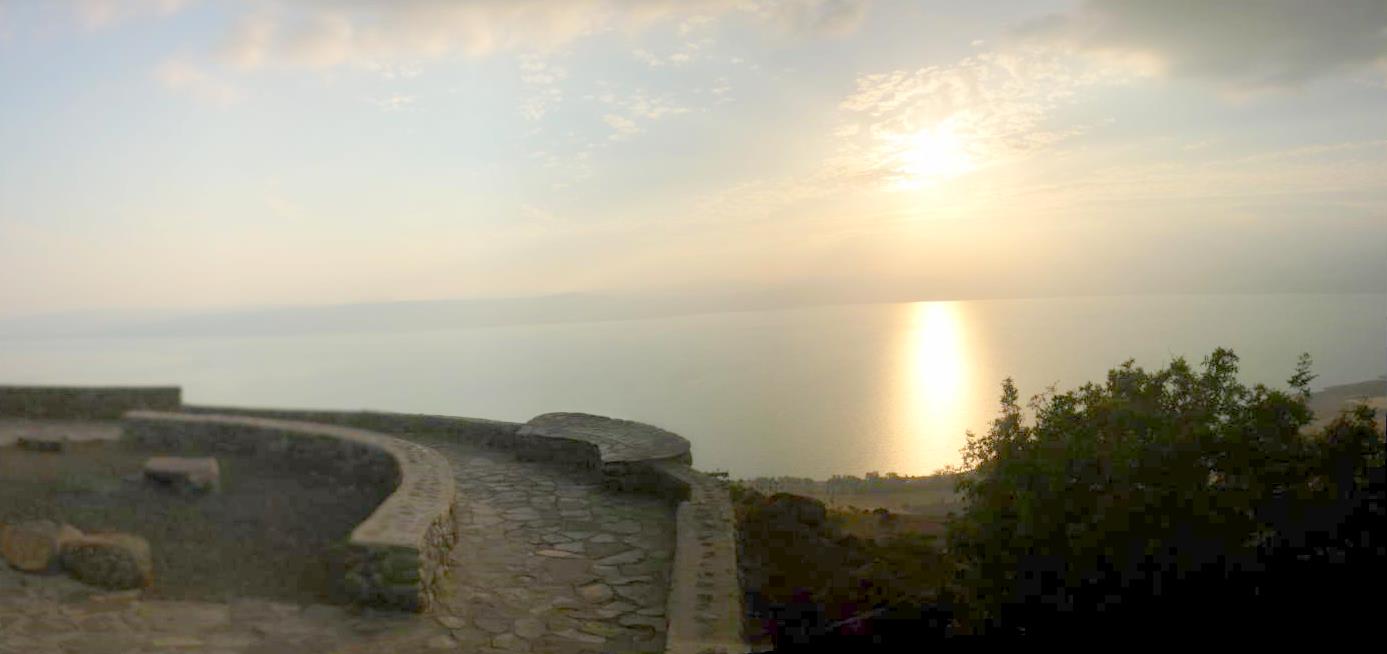
The place we pitched on a picnic site was nothing short of spectacular.  The lake is about 13 by 8 miles long.

I wasn’t able to get join the six pictures together to get a full impression of the lake, but I think this one is ok:


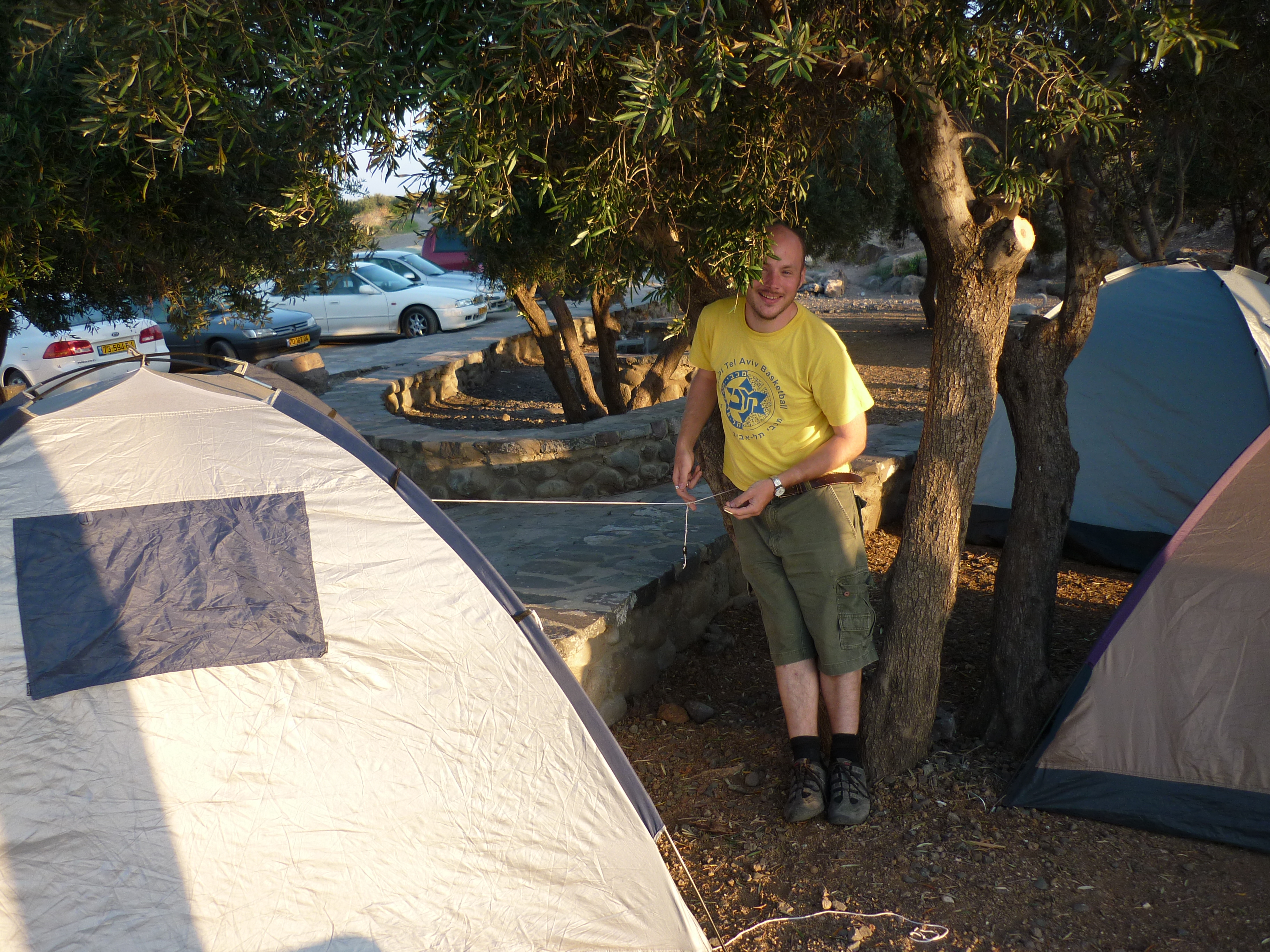
top: As the ground is very hard and difficult to get pegs in without a hammer, I opted to mix bodging and camping and tie my tent ropes to this tree which had branches in the right place. lower: the Lance boys are well used to making a good fire.

That night I got to learn the phrase ‘glamping‘ ie: glamorous camping, a word to induce general banter, amusement and teasing of other members of the party who were less used to proper camping and would take frivolous luxuries such as iPhones, posh wine glasses and other things more suited to home. ‘you glamper, you!’

Parts 1 2 3 – more soon…

The Sanhedrin Tombs, burning garbage, wild birds

On Sunday before church I was taking a ride around the city in the afternoon close to Meir Shareem.

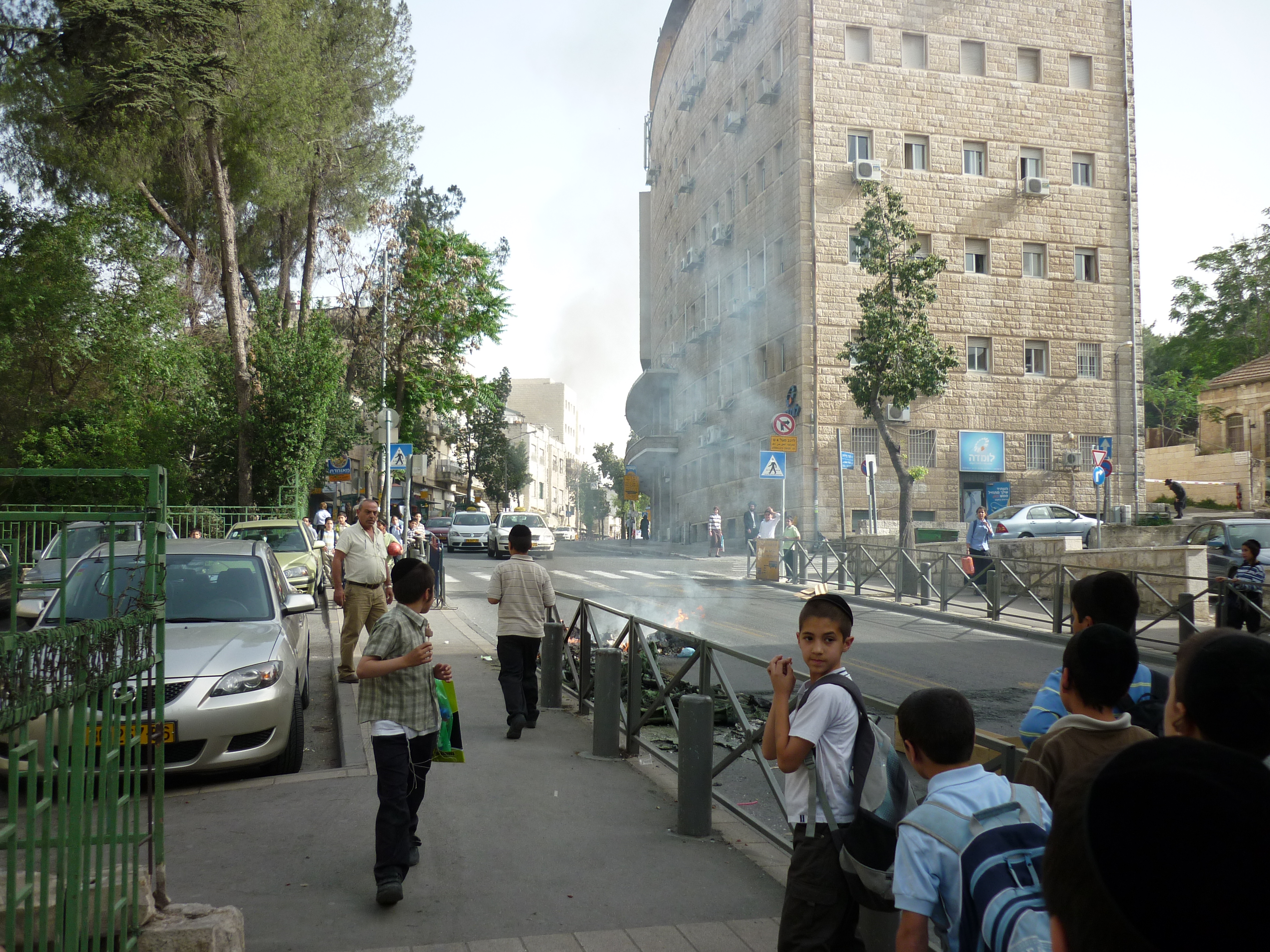
The Haredi community (Ultra Orthodox people) which live in this part of town seem to have got upset about something (usually that government had said or done)  had decided to burn some rubbish bins, hence the horrible smelling melted green plastic still burning in the road.  I didn’t see any people that looked like they were angry or holding cans of petrol or whatever as it seems they had already fled.   Seeing as I blogged before about Arab community burning bins, maybe setting fire to garbage is becoming a national sport or something?


Anyway, I got sight of this sign post, and decided to investigate.

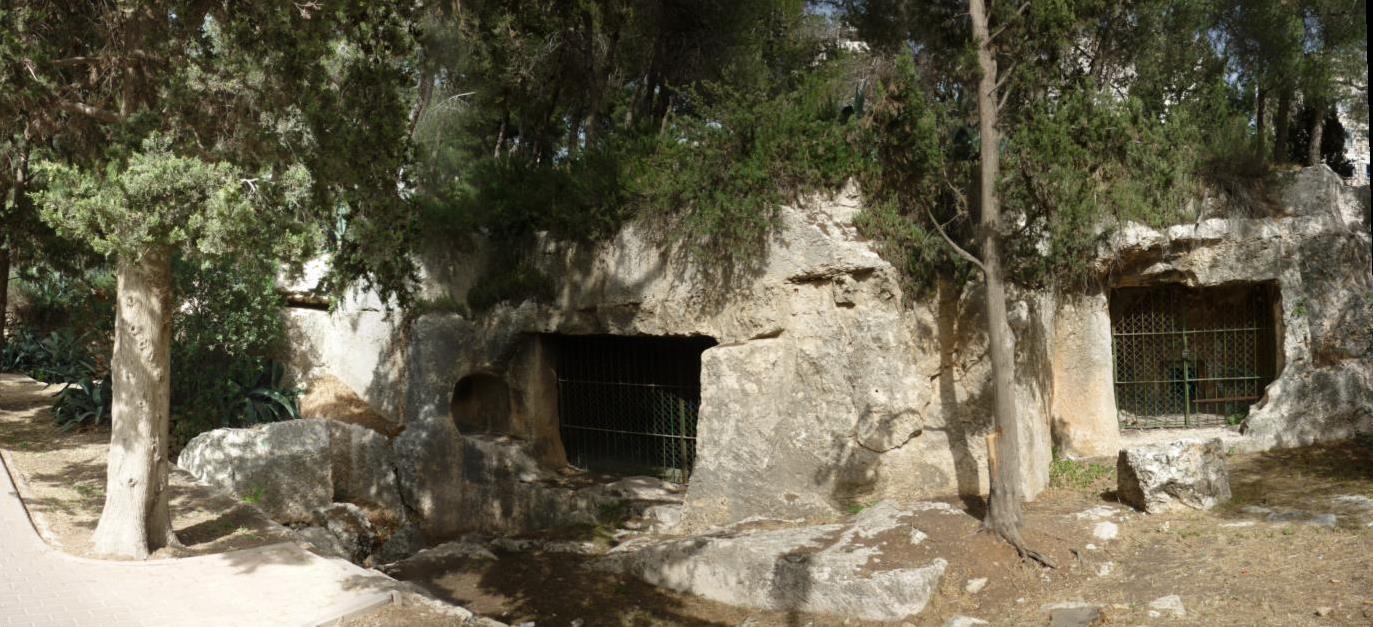
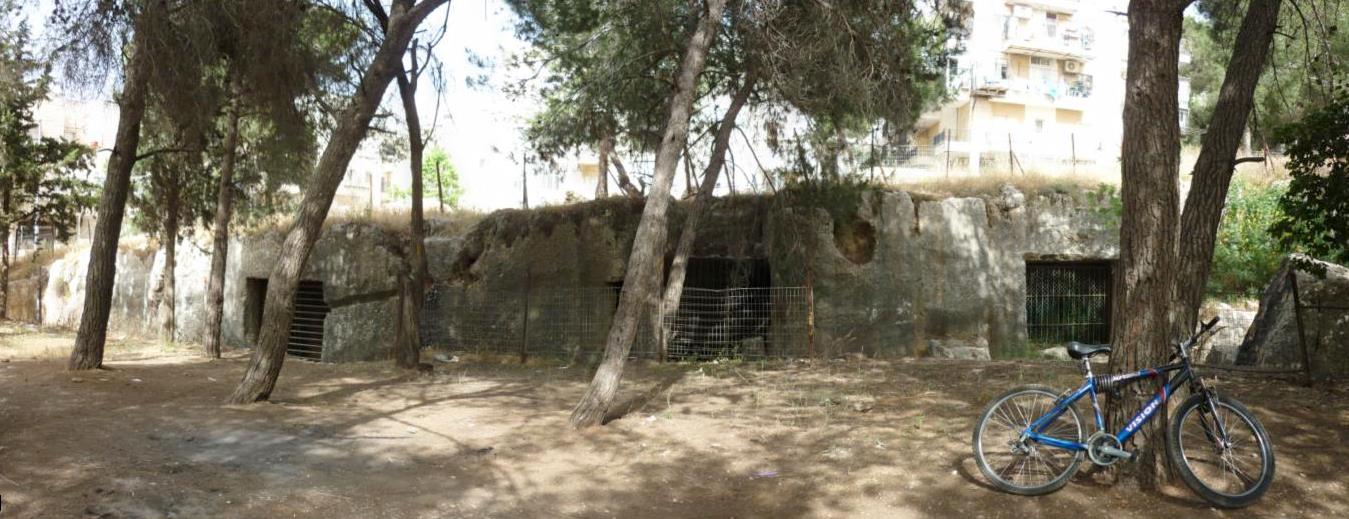
Various sources I have read up on the Sanhedrin Tombs says the bones of who was buried there were taken away years ago.  More articles here.

Sadly there is a fair bit of discarded garbage in the park, its a nice place to take a shade from the hot midday heat though.

As you can see the caves are partially fenced off (except one) to stop being putting rubbish in them or using them as a toilet.

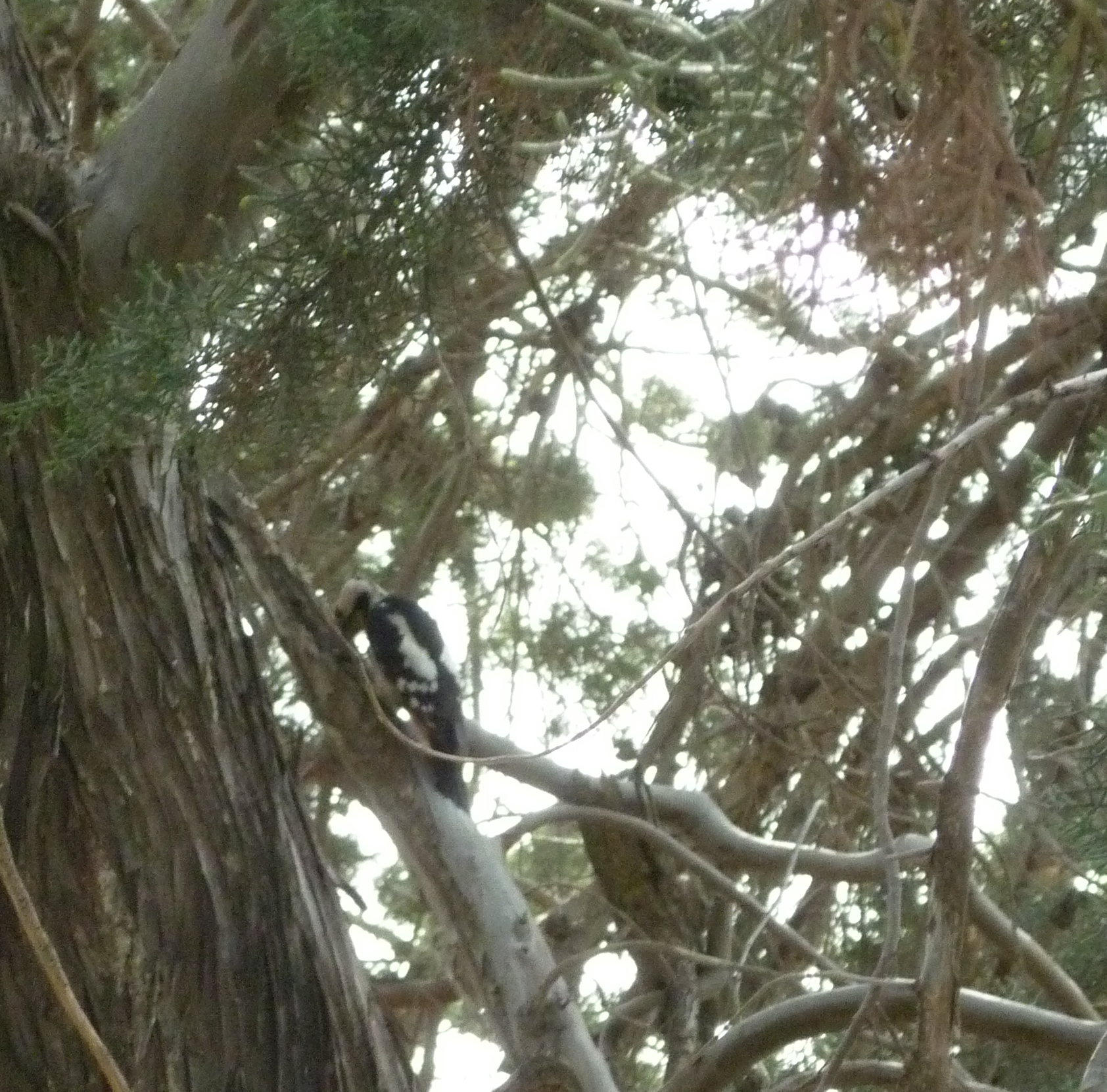
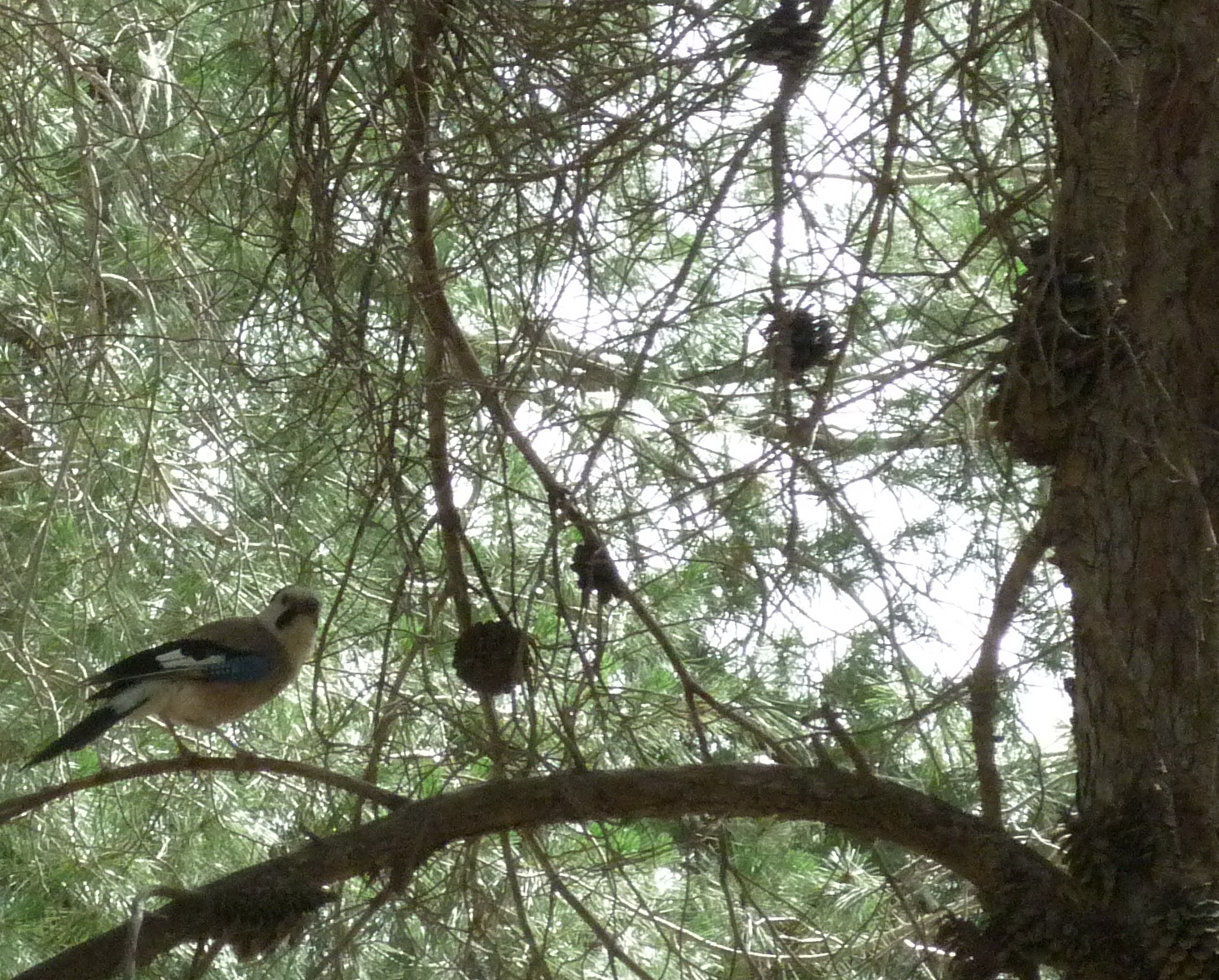
The park amongst the tombs, had some Orthodox families walking through  enjoying the escape from the frantic pace of the city, but also I got a glimpse of some nice birds in the trees.

A Woodpecker and a Blue Jay (looks like baby, they are normally a bit bigger than this)  I have seen both these birds sometimes my work’s headquarters in the garden, but its a pleasure to see them anywhere.

Brief visit to the temple mount

Several times I was curious about visiting the Temple Mount, the hotly disputed centre of the old city, where the dome of the rock is, an important worship place for Muslims, the times of opening to non-Muslims is a bit confusing and there is only one entrance in, up the wooden bridges that ascends next to the Kotel (Western Wall)  so every time I have visited the entrance is shut.

Although I say this, according to Islamic theology, neither Jerusalem or its Arabic name Al-Quds feature in the Quran, unlike Mecca of course in Saudi Arabia where Muslims aim to make a pilgrimage at least once in their lifetime.   Nevertheless the Dome of the Rock with its gold roof stands as a centre piece in Jerusalem.  Of course this area is considered to be the place where the third Jewish temple will be built and often there are riots up here as Muslims react angrily if they here any rumours that Israel may be hinting at attempting to rebuild a temple there, I have an Arab friend who works an ambulance worker who often gets called there.  Such is the extremely politically volatile climate this area is in.

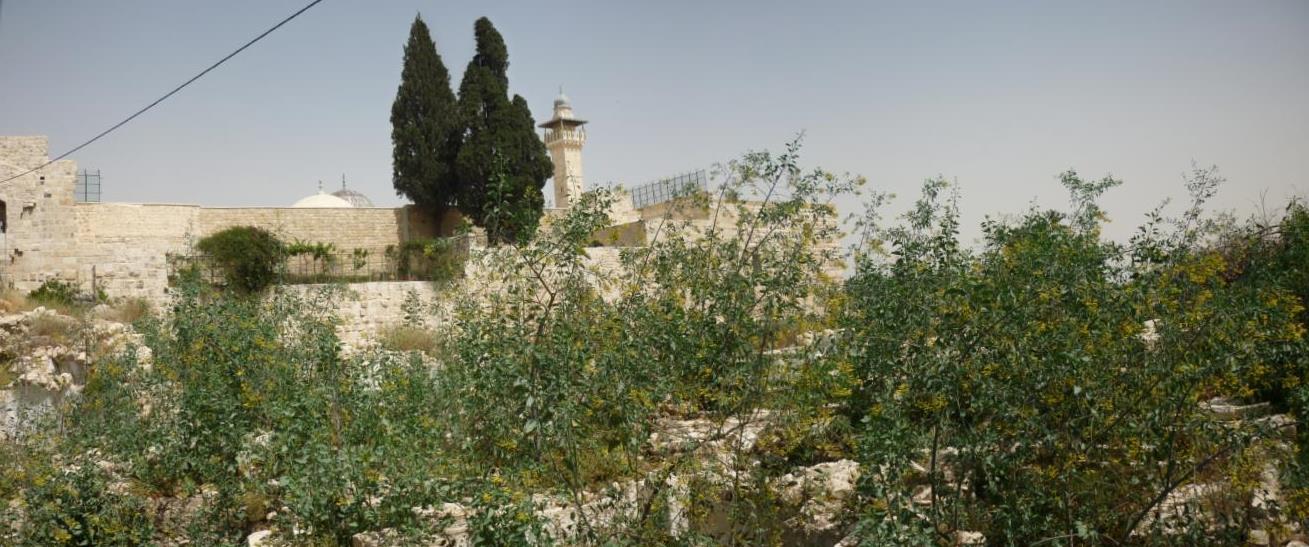
Looking down from the wooden bridge you can get some nice shots of the Kotel through the wooden slats of the bridge.  On the other side are these interesting ruins I have not spotted before.


Here this rusty sign above the doorway at the entrance to the Temple Mount shows that this not-accessible, (I am pretty sure Israelis are not allowed in, its only intended for Muslims and visiting foreigners)  I am not sure which age or era this sign is from.

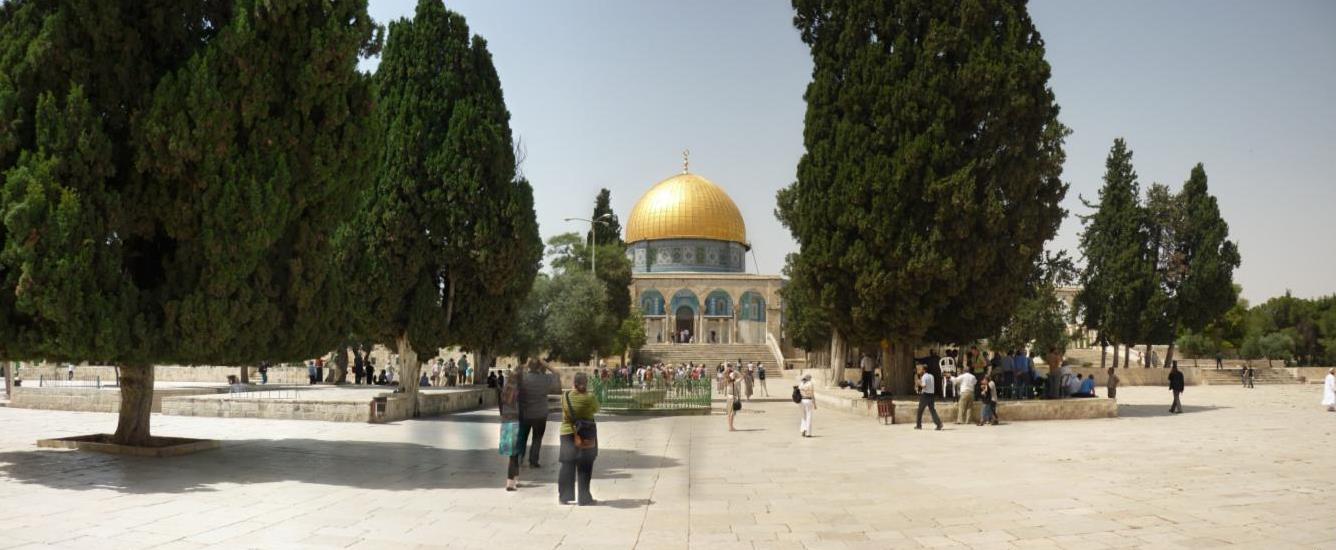
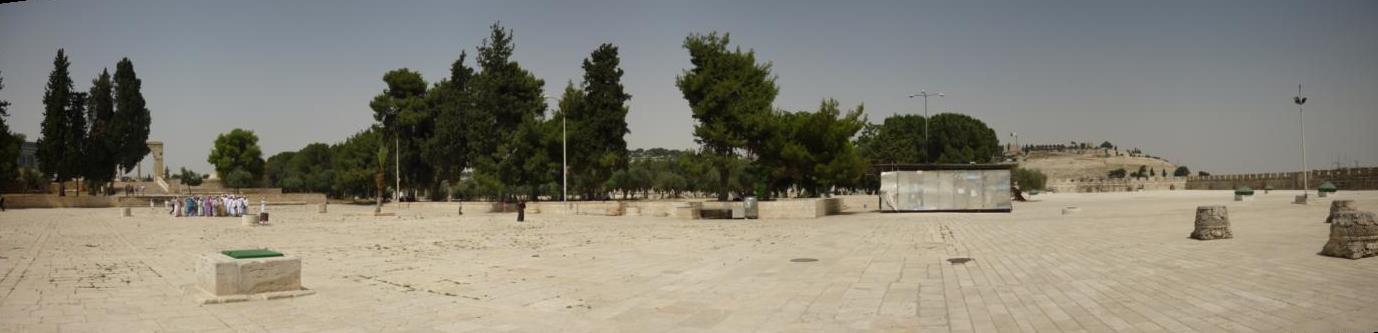
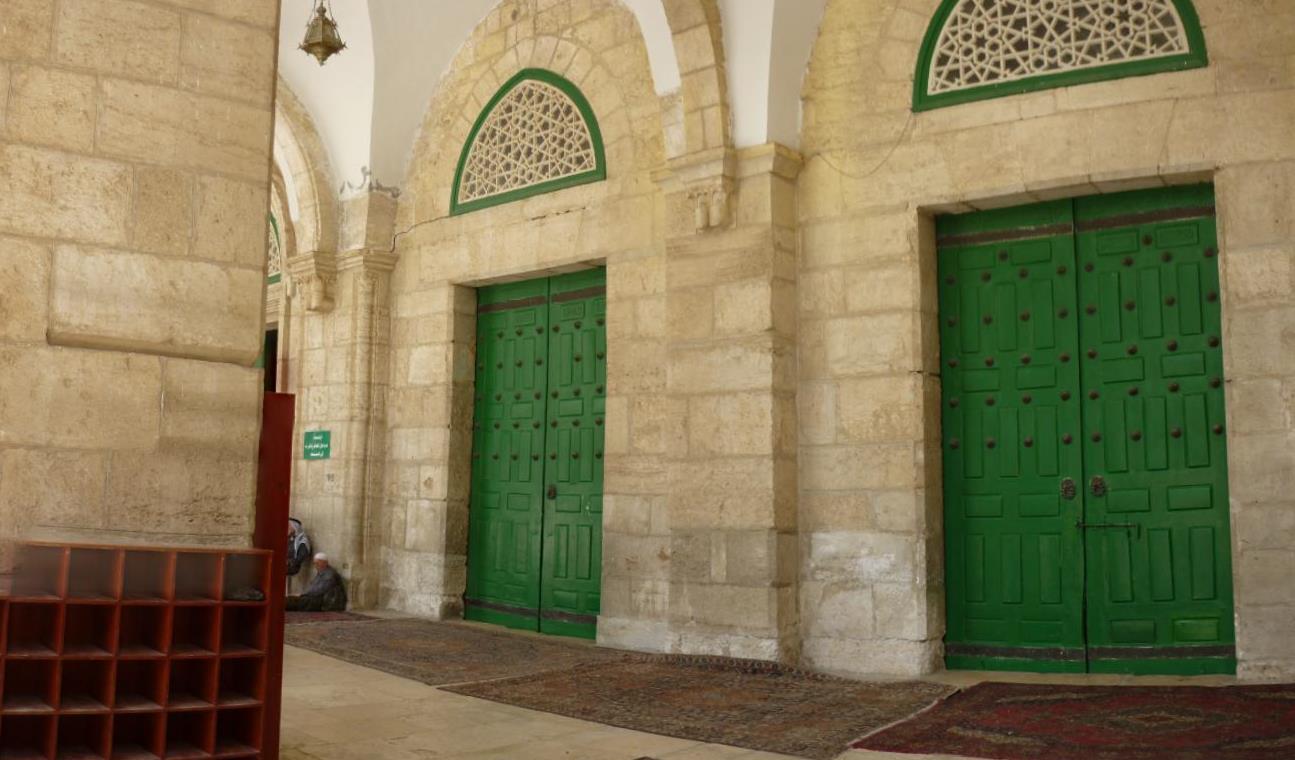
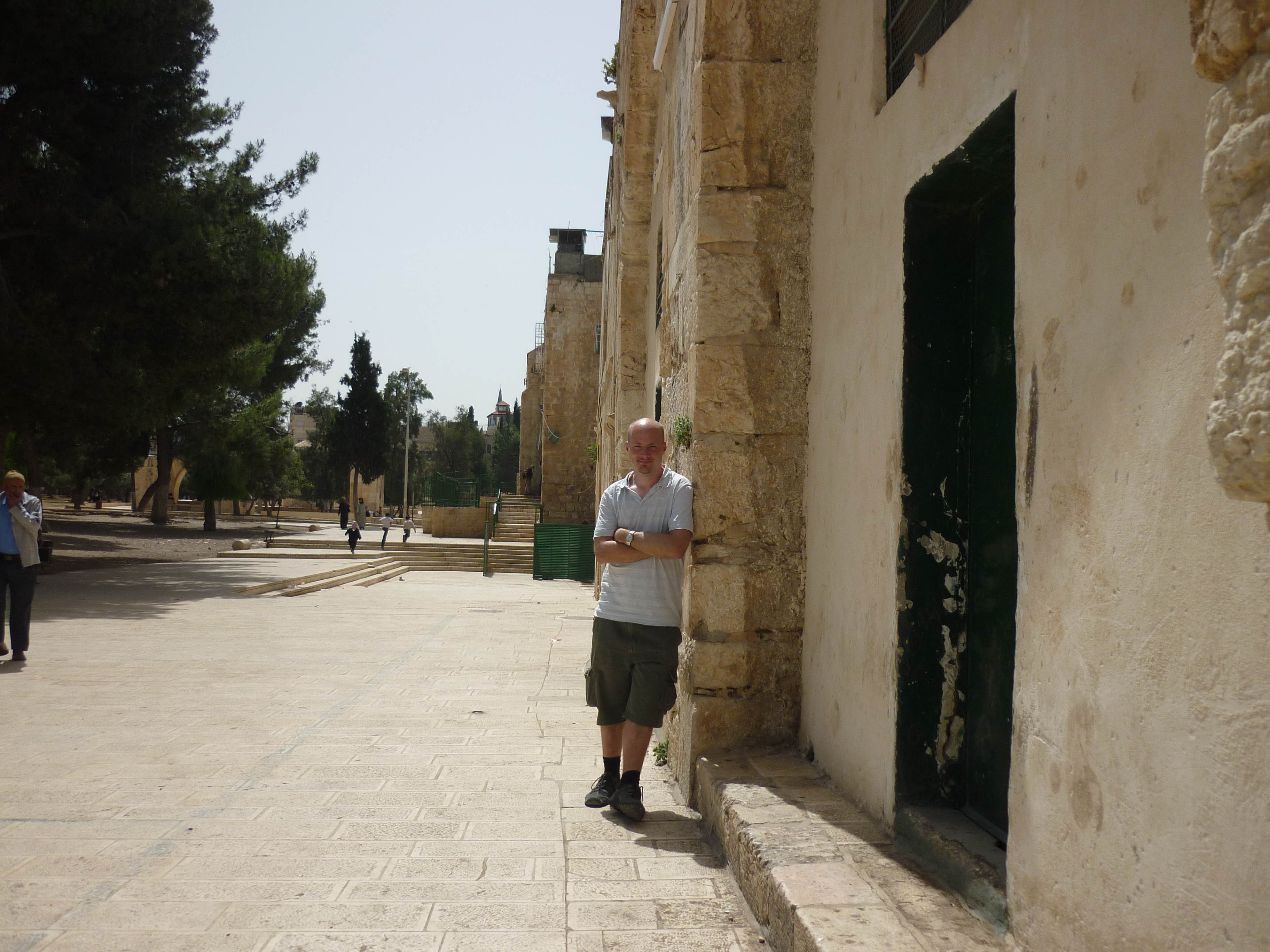
Once in, the Temple Mount is quite different, where as everything is tightly squeezed in the walls of the old city into the four quarters (Christian, Jewish, Islamic and Armenian sections) and I would imagine property prices are high, here in the courtyard of this place there is a lot of big open space, and some nice trees and the walls, stairways and buildings are of interesting architecture, with the familiar green doors I see associated with Islamic buildings.

The main mosque has some cracks in the walls apparently, mainly due some unannounced extensions underground built by the Arab authorities, there is talk that some structural repairs are needed (the ancient walls around the old city have had a lot of maintenance needed lately)   but as Muslims are not keen on having Israeli structural engineers in their famous mosque, I am not sure of any remedial work has been done.   So given a busy day with a lot of people visiting the mosque, this could give great cause for concern for safety.

I wanted to get some shots of one of the insides of the buildings, I had to make do with this one as I was gestured by one of the staff not to take pictures, or it might of been in accordance with Islamic culture I should take my shoes off.  Anyway I decided to settle on just a wander around the inside perimeter walls of the Temple Mount, after getting around just two sides of the wall.

After passing one of the exits, I was told by a member of security I had to leave as time was up for visitors at 3.30pm, I was kind of disappointed as I want to good chance to leisurely explore this place which I have not seen previously.

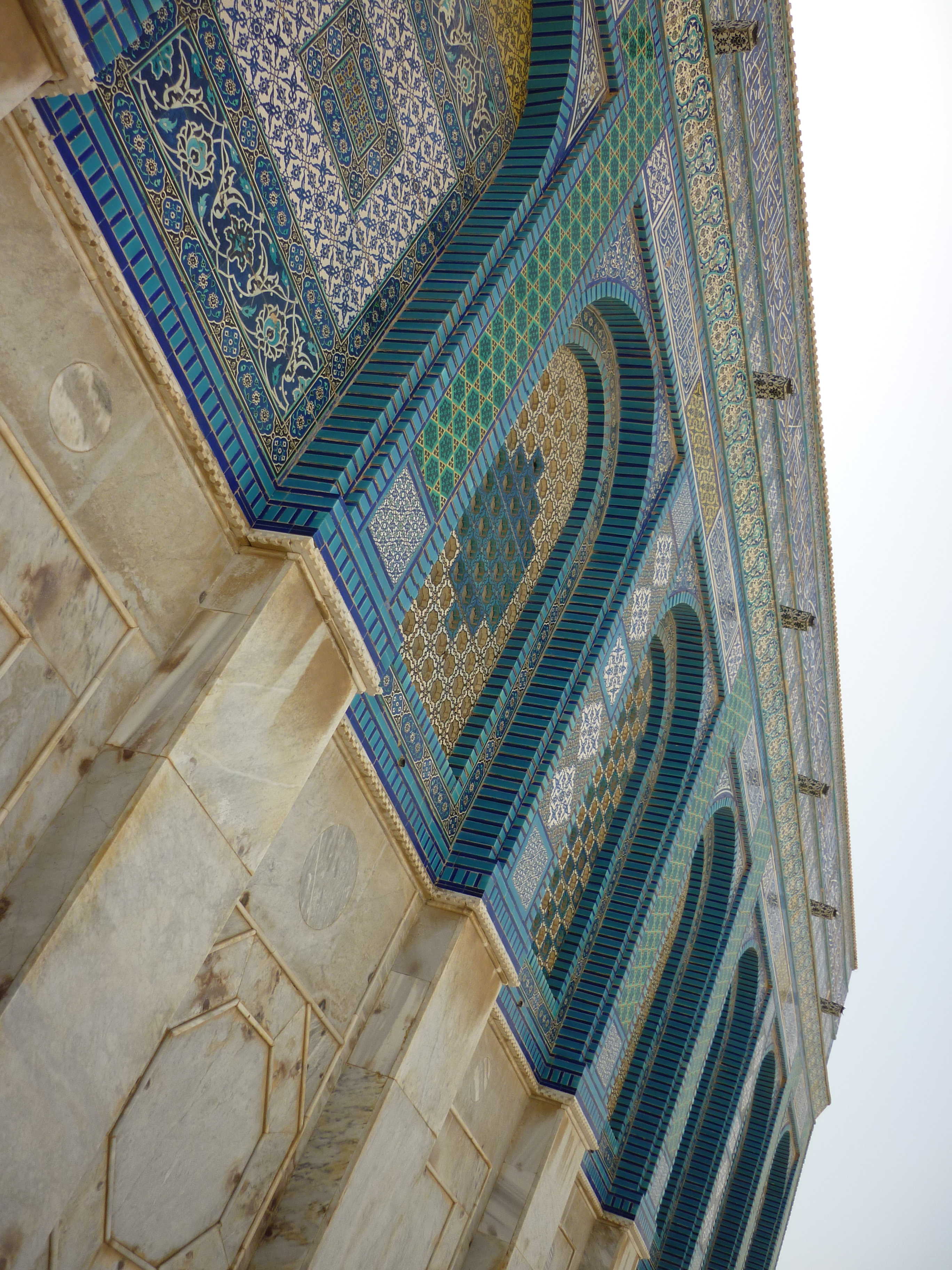
As a Christian I believe some day Yeshua (Jesus) will return here and the temple will be rebuilt, and as the Dome sits as a centre point in the city, the architecture of this new place will be pretty spectacular as the bible says when Jerusalem becomes a completely free from war and conflict.

small laptops and netbooks, Jon test drives and reviews

Most of the people I know here volunteering in one of the several charities in and around Jerusalem have a laptop.  A lot of people have a laptop for just home use as the prefer to access the web in a comfy chair.

Increasingly now, some people are turning to smaller laptops better suited for working on the move.   Netbooks, which came about in the last three years or so, are popular as they are cheap small and enable you to get online anywhere too.

I have serviced and maintained various ultra-mobile computers for my work and for friends, I thought I would give a brief review of what I have found.  It has to be said that with Netbooks, they are compromised on performance and usability to make the cheap and smaller, depending on your requirements this can be a hindrance or perfectly adequate for just working on the move.   Remember, as in most cases there isn’t a DVD drive built in, you have to buy this separately, which means a lot more cost and more to possibly carry around with you, this of course necessary if the computer’s OS crashes and needs to be reloaded again.

Asus EEE 701

This was one of the first netbooks on the market, and when I was working for NICE systems (UK branch of an Israeli software developer) some of my colleagues got some of these from an overseas business trip before they were out in the UK.  Cheapness and lightweight were the main things that appealed here.   The machine is small and light, but the plastic body feels a bit cheap, and the trim looks poor.  The EEE easily flops over as the screen is actually heavier than the base.  The LCD is 1024×600 which is adequate but cramped for anything than word processing and web browsing.   The one I tested had a 3G card onboard for browsing on a phone network, 4Gb SSD (solid state disk, that is a purely non-mechanical flash based memory card that acts as a hard disk)   This is very limited for Windows XP, the one I was using the SSD suddenly stopped working, causing the machine to no longer boot.  After some google searching, these type of SSD disks seem to have questionable reliability and hard to replace as this is a non-standard part and cannot be substituted by a regular hard disk.   The EEEs are popular hackers as some features absent can added by soldering USB wireless sticks inside spare space inside the screen lid.

It has a low performance Celeron 900 processor which is outdated compared today’s popular and cheap Intel Atom chips in most netbooks.  Verdict, the Asus EEE is not a quality system, gets good marks for being one of the first on the market, but can’t be recommended now.  There are numerous newer models of the EEE family. Asus however is a very poor hardware maker, they are well respected by the home built PC crowd, but their web site for support is terrible, and finding drivers is awkward and when getting drivers for my PCs at work, they never have enough bandwidth to provide downloads and suggest using a torrent app to get the drivers (very risky!)  a lot of their drivers are only listed as Beta test versions.   For this reason, in my opinion Asus are only good as a hardware maker for the overclocking PC gaming kids.   For laptops and netbooks the competition is way better, so avoid Asus.

Dell Mini 9 (also known as Inspiron 900)

This was Dells first attempt at a small netbook about 2 years ago.   It belongs to my work and is perfect for working on the move.  It feels solid and well made like most of Dell’s hardware, if you are corporate tech person like me, you will know Dell’s are a joy to support, as you can get drivers quickly and easily from the 7 digit serial number on the bottom.  In terms of compromises, the F keys are missing, requiring the user to press FN and numeric keys along the top to get these, this is actually quite a good cost saving idea and doesn’t impact on the user’s work.  This machine has also a 16Gb SSD disk but I think can be substituted for a regular SATA hard disk, the battery life is really good.   Overall I like the Mini 9.

Acer Aspire One

This is a very respectable Netbook with 1Gb of memory and 160Gb hard disk, seem well made and good performance, nothing that much out of the ordinary, but worth considering.

Compaq Mini 110

This was a friend’s machine, and came bundled with XP Service Pack 3 and Internet Explorer 8.   I had some difficulties getting online as the wireless card seemed flakey, but this was probably due the coffee shop I was in was close to a metal fence cause wireless interference.  Of course like a lot of hardware makers, HP (who bought Compaq) some years ago, preload a fair bit of rubbish onto this machine so annoying browser toolbars and other tat are there as search engine use probably earns HP’s a few quid.   I put on newer wireless drivers and replaced IE with Firefox with the browser icon set smaller to come with the small screen.   Overall this is a nice unit too, with glossy black case and sharp screen and has a decent keyboard usable for people with fat fingers.  Battery life was good too.

HP netbook (unknown but close to above)

I have also used a HP branded machine similar to the above Compaq but silver, privately owned by one of my users but uses it for work.  Has a regular 120Gb hard disk.  My only complaint was the silver paint rubbed off the keys after a years worth of use, and of course installing Adobe Acrobat 9 pro on it, meant the installation didn’t work quite right unless you put it on an external screen.   But of course this is the play off with a system with a 1024×600 screen.  Oh, but there is only ONE USB port on this machine so small external hard disks that have two connectors will have some trouble connecting to this, meaning more costs and silly adapters to carry round with you.

Dell Latitide X1

I use this at my work to do the song lyrics for our worship sessions using an open source app called ‘Open song‘ which is excellent.  The X1 is a proper laptop but not a netbook, so has a Celeron 1.4 processor, full 1024×768 screen and very good keyboard and touchpad, its super lightweight but doesn’t fall over, the battery still seems good considering this machine is 5 years old now.  I did try to open it up to upgrade it, but found there was not available slots to upgrade the memory (it has 256Mb fixed to the motherboard and 512Mb in a single SODIMM slot)  It also has an unusual 1.8″ (like an iPod) style hard disk.   Think this would of been expensive to buy new, and the external DVD writer seems to have gone flakey and needs replacing, but for it ultra lightweight size, this is a excellent no compromise portable system to work anywhere.

IBM Thinkpad X31

I have used these at two places I used to work.  Like all Thinkpads they are hugely expensive for the standard type laptops, even more so for the small form factor units like this.   The X series Thinkpads also have an option snap on base with DVD drive which fixes on securely and can be used with the laptop on the move.  The casing is magnesium alloy, and the hinges and frame of the laptop are very high quality, you have a regular 1024×768 screen, but only IBM’s quirky nipple controller and not a normal touch pad which a lot of users might not like.  The X31 dates from around 2003-04 so very old now but can be bought cheaply second hand.  Thinkpads are now made including newer X series models by Lenovo who bought out IBM’s laptop business, which IBM decided the margins on PC hardware were too thin.

Gigabyte M912

This belongs to my work, this netbook is unusual as it runs XP tablet edition, the screen rotates round on a single central mounted hinge and fold back on it self making it into a full tablet computer.   It has a hard disk of 160gb.  Microsoft produced the tablet edition of XP back in 2003 but it was a failure with just HP and Toshiba producing a few portables using it back then, so it was a surprise seeing this machine with Tablet XP that’s only a couple of years old.   Gigabyte are like Asus, they mainly make clone motherboards, this netbook is not something with even medium quality feel to it, the power switch is a sliding bit of plastic that feels like its about to break off, the silver effect to case looks horrible, and where as the tablet feature in XP is reasonably pleasant to use with slide out pen stylus, I didn’t try and use the handwriting recognition software, but the screen is horrible, its grainy, probably because of the fine mesh type material that is used for the pen, but still not that nice, the keys are tiny also.  There is a bug in the BIOS I think (I put on a update, this didn’t fix it) that causes the machine to hang when started with a USB DVD Drive, all thats needed is to quickly remove and reinsert the USB cable though.  Not recommended.

Toshiba netbook (dunno model sorry)

I quite like Toshiba’s previous laptops, and this one is good although as extremely new in the market runs Windows 7 Starter edition.  Like Apple (and Sony’s Vaio who tend to be the first PC maker to mimic Apple’s features) this has one of the new keyboard with no gaps in between, so less likely to drop crumbs in the keys.   This machines seems pleasant enough to use and has usual netbook 1024×800 screen and 160Gb hard disk – but the Starter edition of 7, intended to completely replace XP home, is not available for casual retail purchase, its only available pre-loaded on low laptops like this, seems heavily compromised compared the regular versions of Win7, you can’t change your Windows wallpaper screen, something that was hugely disappointing to the lady who bough this unit.  I have no doubt that a lot of users will be disappointed that 7 Starter is a backward step from XP in several ways.

Overall, the choice is dependent on taste, certainly price, battery life, physical size, disk storage and performance should be factored into when needing a portable computer.

There’s also tablet computers, in the last month or so Apple’s now famous iPad came about, being a upsized version of the iPhone, and a lot of fans of Apple’s hardware wet themselves with excitement.   I don’t really see the intended target market of it, the unit has to be linked with iTunes with a regular iPod or iPhone, and so its not a self contained computer, I don’t think it easily connects to a company network or even can use a printer.    Theres also Apple’s total control on the apps store which developers and consumers are getting frustrated with lack of choice.  I have not used an iPad, but it has some questions with its usability, do Apple fans want to carry this and an iPhone or iTouch when they go out?   not being an upright device with a stand, having screen reflection has got to be annoyance, no physical keyboard means this isn’t the right device for writers and bloggers surely.    I can see this being a novelty item that people will quickly get tire of, wether they are hardened fans of Apple or users of any brand hardware.  I think it could have some niche for artists using Adobe Illustrator to do work away from their desk or maybe for musicians though.

I haven’t mentioned Linux or Android. Linux was intended to be supplied on netbooks like Asus EEE but quietly disappeared from retail suppliers, due to its more complex, and I don’t think grandma wants to have to enter things in the command line just to install a photo editing app.   My own experience with Linux is I have tried numerous different distros but always not done much more that install it briefly and forget due to having to learn a whole new computing experience.  Has to be said that as well as the free and openness of say Ubuntu its certainly pleasant to use to some degree but having to rely often on a command line to install things puts me off.   Android, being Google and the Open Handset Alliance who wrote a phone operating system based on Linux looks enticing, but the vast array (HTC, Motorola, Samsung, etc) of manufacturers have adapted it to their own method so small computers and phones that runs this, could be fragmented and not so consistent in use, and newer versions of the Android OS, like 2.1 may not be able to some models.

Jonathan is volunteering for a charity in Jerusalem keeping the IT systems running so a busy Christian charity can continue to bless Israel’s families that are in most need.   As I am on a very small allowance to partly pay for me keep here, I am always welcome opportunities to provide consulting, repair advice and servicing to anyone in need of technical issues keeping you from working.   Feel free to contact with any questions or offers of work, he would appreciate any donations in return for assistance on any problems you are facing.
UK elections – how about drive in voting?

This week has been elections in the UK, I haven’t taken part, as although I don’t agree with apathy on voting, I am in another country, and wasn’t quite organised to sort out a postal vote, plus I don’t know if the logistics in this kind of thing are practical as post is quite slow between UK and Israel.

There is talk again about arranging voting electronically.  I am totally against this as there is no way of making this work with accountability, and that the IT systems are telling the truth about who pressed the button or clicked the square.

There was also anger over people having to be queueing for ages and then not being able, and the 10pm (or whatever) deadline goes and people were told they were too late.

To avoid people not bothering at all – how about this?

Drive in voting.  I reckon a good 20-30% of the country would like to vote on their way home from work.

This could be quite simple.   Find an empty council (or business) car park which should be empty or mostly empty the evening the voting happens.

You go into a car park close to a main road with clear sign posts, once into the car park you just drive upto three different sheds, one for surnames A-K, L-R, and S-Z or whatever and collect your ballot paper and they do the usual procedures there.   Drive on a little bit further to another small stop and write your vote, and dump a throw away type biro and ballot paper into a big box, and off you go.  Job done in probably 90 seconds or so.   Wouldn’t cost much.  Not much different from going onto a toll road, or drive in McDonalds.

Road trip to the Galilee

Parts 1 2 3 – more soon…

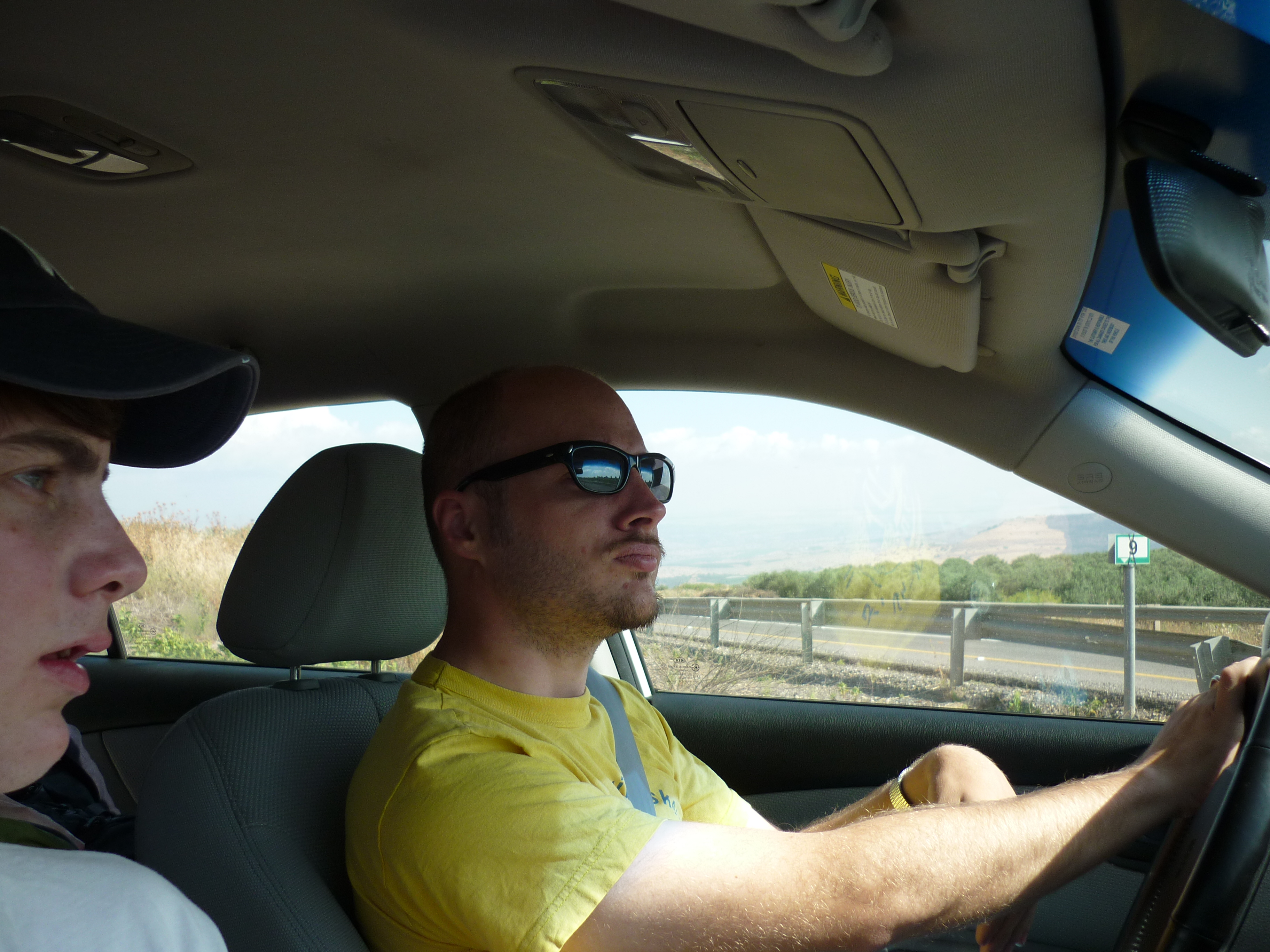
Last weekend I went on a road trip, 10 of us in two cars up to the north of the country towards the Golans and the Galilee with me doing some of the driving, I picked up the rental car, a Kia Magentis a fairly dull Korean car which did the job fine, it had plenty of space and was reasonably pleasant to drive.  Seems that Israelis mostly favour automatics I am not sure why it maybe to do with the lot of Americans that are here, or possibly due to the roads are steep and hilly, and as the speed of your driving has to change very frequently, it becomes a lot of work to constantly switch between second and third gear often as I have found as I often use to drive around Hindhead and Surrey way back in the UK when I often drive through the twisty roads  in a forest in mostly darkness to go and have a few beers and a curry with my good friend John P who is there.

Anyway the trip required a large cooler box for perishable food, a ton of nuts and dried fruit, lots of firewood as well as 5 tents and sleeping bags for everyone as well as the pots and pans.

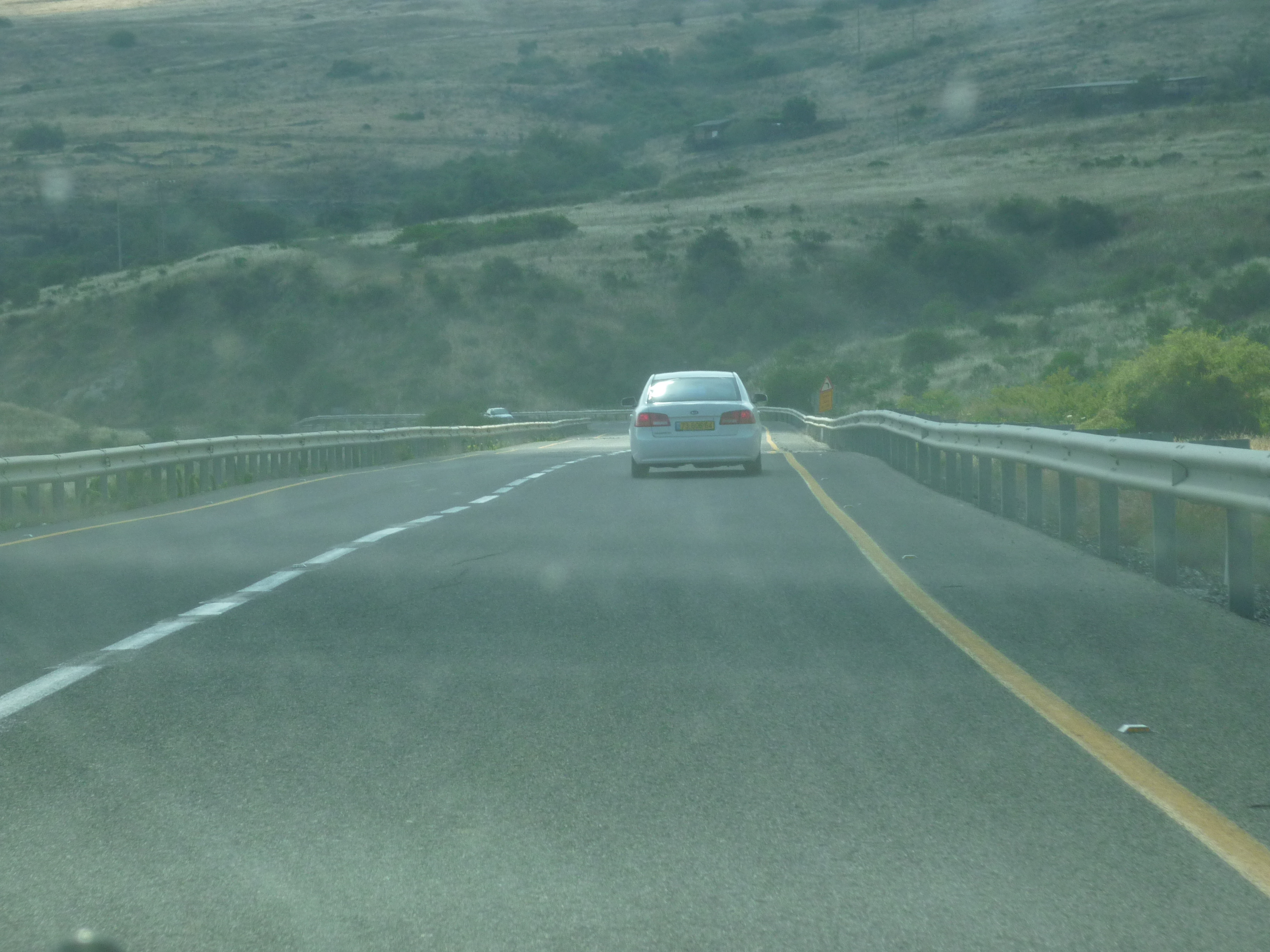
The drive up there, although was challenging needing to be assertive enough to squeeze in competing traffic, not in a aggressive or selfish way, but part of the hectic patterns of driving which is common here.  Cars here are often old and beat up and deaths in road accidents are twice what they are in UK and the US, not hard to imagine when I often see other drivers impatiently overtaking on some completely blind bends and hills.  Although driving standards are bad here so is Italy, Greece, Turkey and Egypt, so it seems to be a Mediterranean thing.  I found it not that hard to drive on the other side of the road but an auto box takes a little bit of getting used to.   Unlike modern European cars which have a stereo integral into the dash which is not easily removable, this car has a generic type stereo fitted, this meant it had tiny buttons, no steering column controls, and produced lots of scrolling messages about how many channels and watts it has which I find quite irritating.  There is a small numeric keyboard glued onto the dash (all cars in Israel have these, it’s a mandatory requirement by the insurance companies I believe)  and requires a four digit code to enable the engine to start, but the Kia I had although new doesn’t like starting first time, and needed the ignition off after a first attempt to get going.  This car is also a bit dated in styling as I think it’s a rehash of an older Hyundai model.
I think it took me two hours to get to Tiberias, this city named after a Roman leader is the main city in the Galilee region looks out towards the east side of lake and depends on tourism from foreign Christians for its economy.   When I came here before this town looked a bit shabby with the concrete hotels looking a bit reminiscent of a communist era, today these still are a bit of an eye sore but the place looks much smarter now.

Oddly enough it started to rain (remember rain is a rarity here) whilst driving through Tiberias although there is a great need for water as the Galilee (and the Dead Seas as well)  are desperately short, and where as the water is much welcomed I was surprised to see there were no drains or obvious gutter system so the water has no where to go, so the road had lots of surface water.   Hmm, me thinks a good engineer is needed to design a system to channel this to where it’s needed I reckon.

Next camping overlooking the lake…

Parts 1 2 3 – more soon…

Unknown ruins near old city

On saturday, I visited some ruins on a hill that over looks the road by the south part of the walls of the old city.   There are no markings of this site there or on the maps. Map here

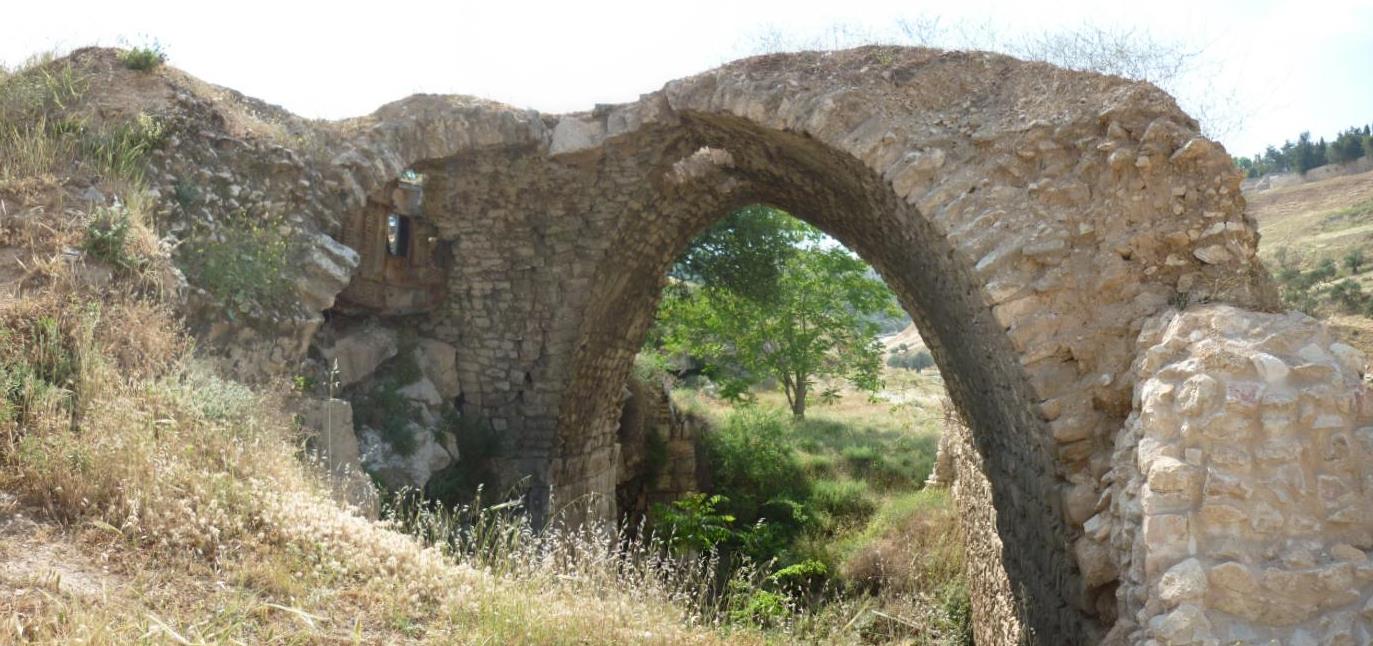
Its directly above the yellow street which turns into a sharp bend.  Up here is interesting remains of an archway of a building set into the side of the hill towards the old city.   You can go underneath this archway (I didn’t as it was very steep) and there are caves underneath that been using for dwelling of some kind.  Below this hill there are trees as I have seen an Arab shepherd leading his flock of goats across before.

To the top of this arch is a big hole in the ground where someone has thrown the wrecked remains of a truck.

I am not sure the origins or age of this site, would appreciate if someone who knows wishes to comment.

Through East Jerusalem

Rode through a bit of East Jerusalem, from the back of my house northwards on sunday.

This part here with zigzag bends was good fun to ride around.

Was a mistake as realised this particular part of town was not safe, I often pass through smaller Arab sections, this was definitely the worse part of this country I have been outside of a car.

To start I went down a very very steep road, as I was hoping to go on the opposite side of the Peace Park, but I was quite some place from there.

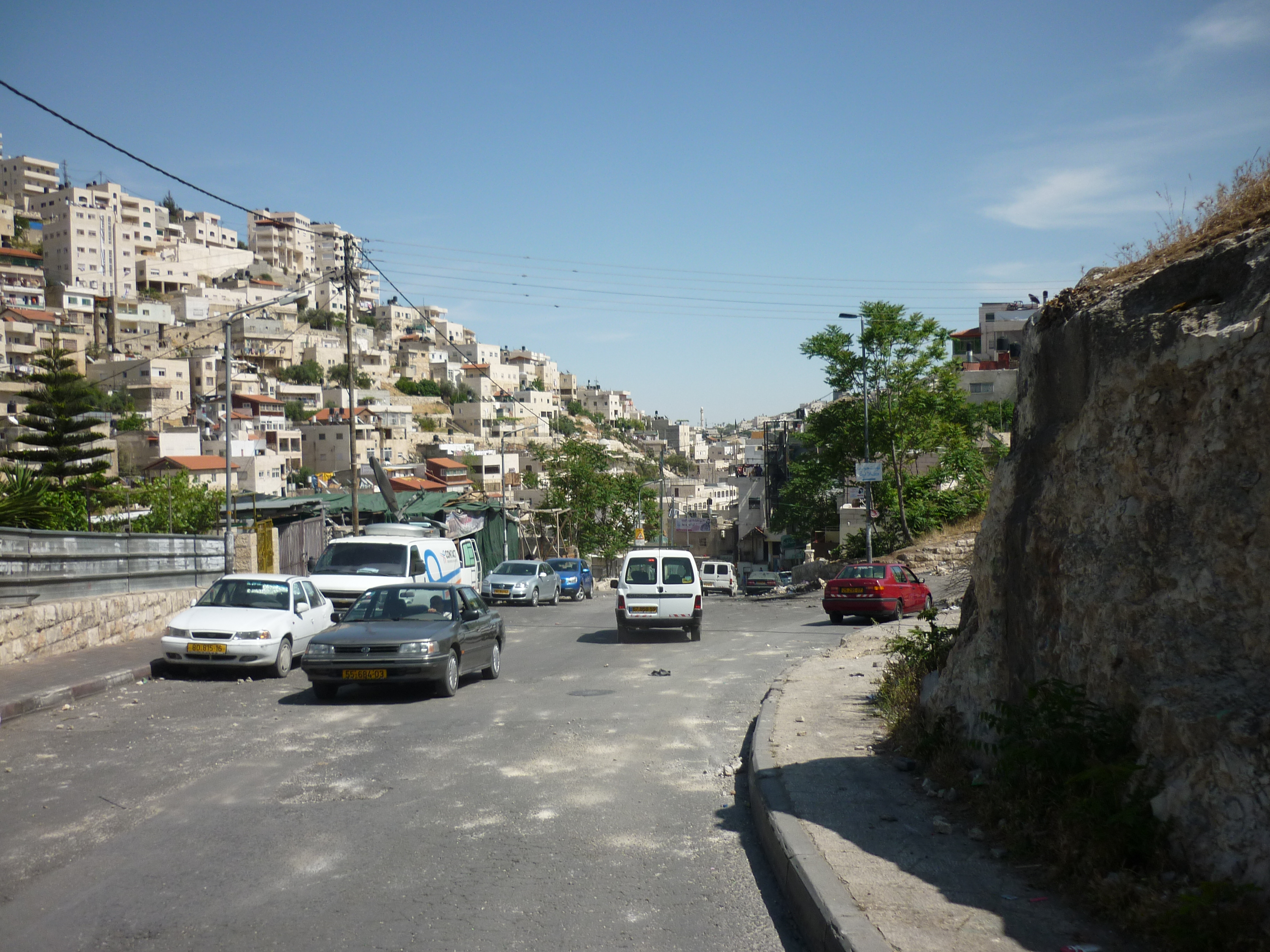
Around the main centre bit of East Jerusalem there was a rubbish bin on fire.  I am always seeing bins on fire, seems like people have nothing better to do that burn stuff.  I asked some kids if they had called the fire service which they said they had.   I turned down another road and saw three different army jeeps patrolling around.

Suddenly noticed the kids (young Arab kids always say Hello to me)  were not so friendly, a large coke bottle landed  few metres away from me, not sure where it came from, but they teenagers were throwing rocks at me, so I walked the bike up the hill quick (its too steep to ride upwards)

I notice this part of town is a complete hole.  All the cars appeared to be vandalised and there is masses of rubbish absolutely everywhere.   The media says Israel needs to be kinder to the Arabs and Palestinians but how can you help people that more or less choose to live like this.  Once I reached safe-ish distance you can see this red VW Jetta had all the windows broken as well as at least 4 other cars further down.   By the way I am on the Israeli side of concrete barrier here, so these people have more freedom than East Jerusalem on the other side of the wall.


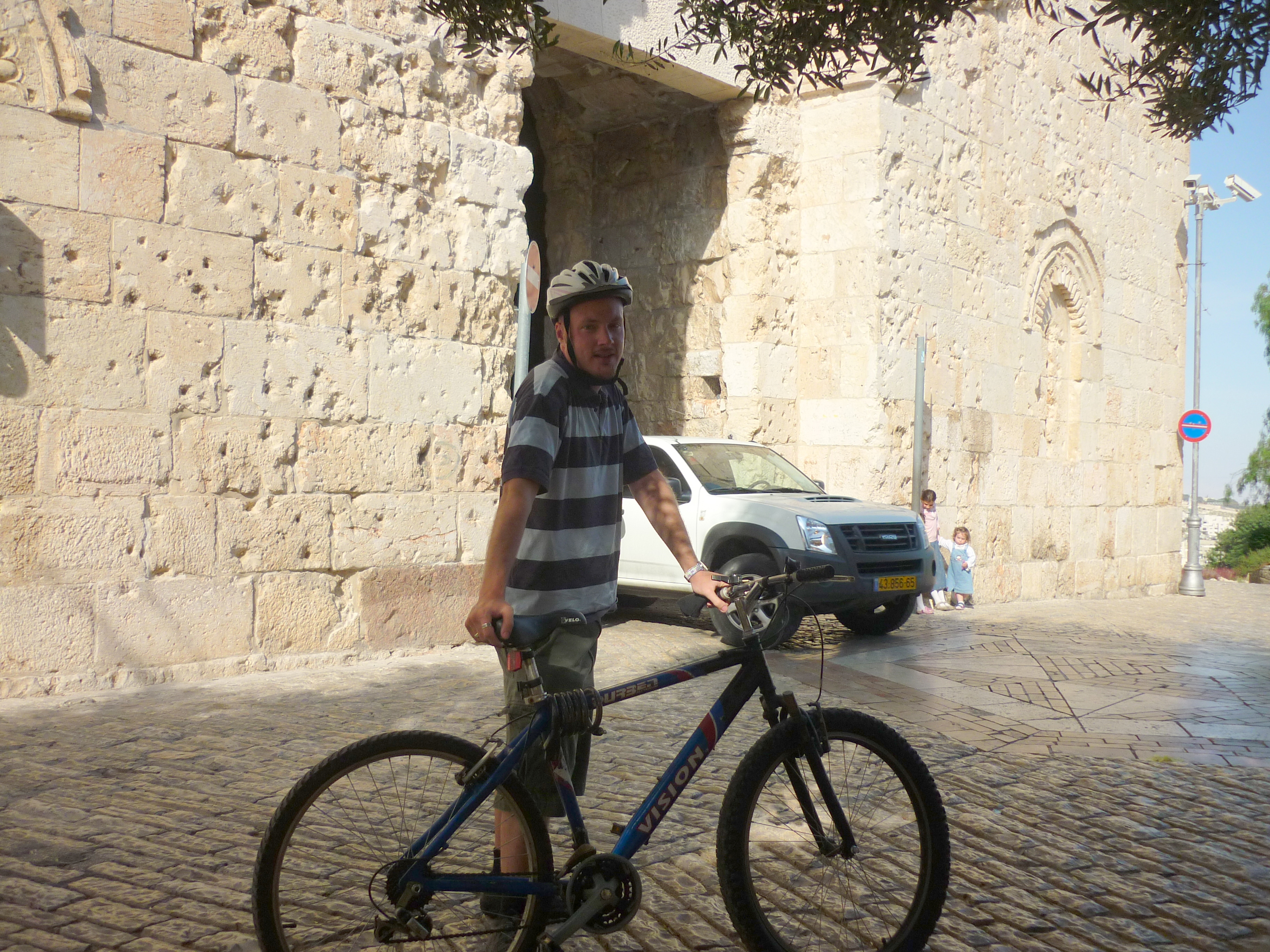
Anyway after another mile or so through the old city I arrived at the Zion Gate.  Glad to be in a nicer place.  Note the bullet holes in the wall date from 1948, the country’s modern formation.  Will bring my map with me next time.

Bethlehem – journey to birthplace of Christ part V – The church of the Nativity finally!

Parts 1 / 2 / 3 / 4 / 5

It was now time for the main centre point of the thing for this trip, so I was quite excited.

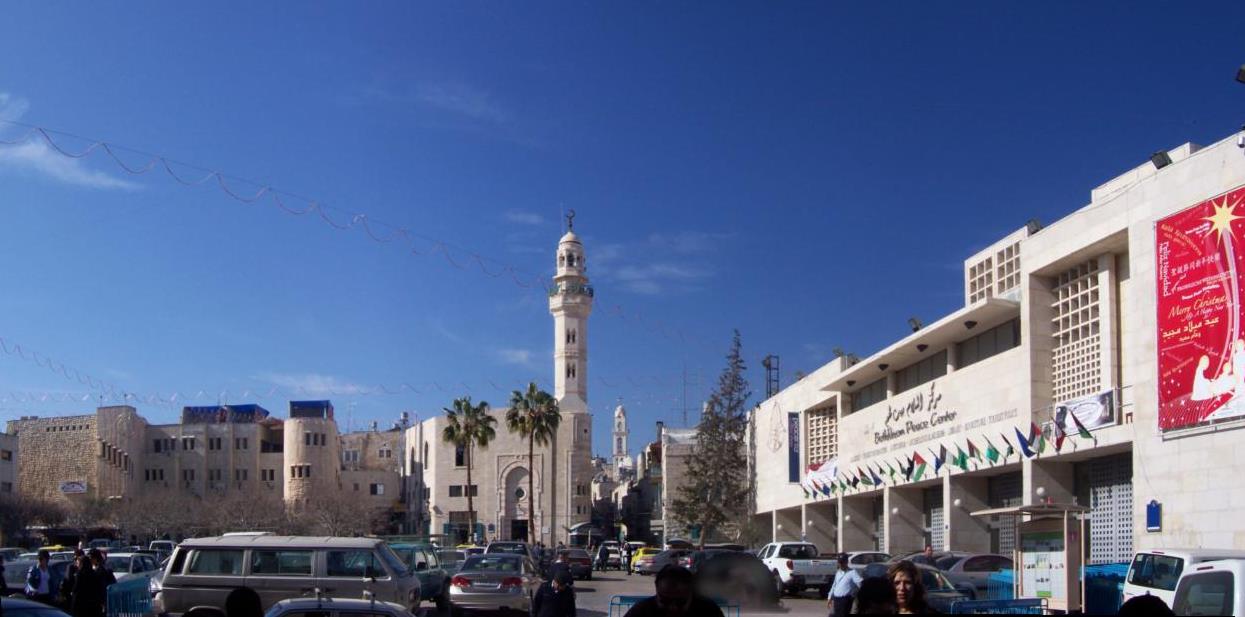
Outside is this conference centre, decorated with Palestinian flags.    Before going into the church’s entrance there were photographs canvassing our party for impromptu souvenir pictures, this consists of sitting in a big row in front of the church, which a picture of the group is done and a print is provided in a presentation cardboard frame.  The group I was with, a Filipino church here on the coach trip did this, I was in it, but didn’t opt to buy a picture, I think copies of the prints (assuming the photographer could guarantee at least say, 20 copies of a average typical coach party) were quite a reasonable price I think.

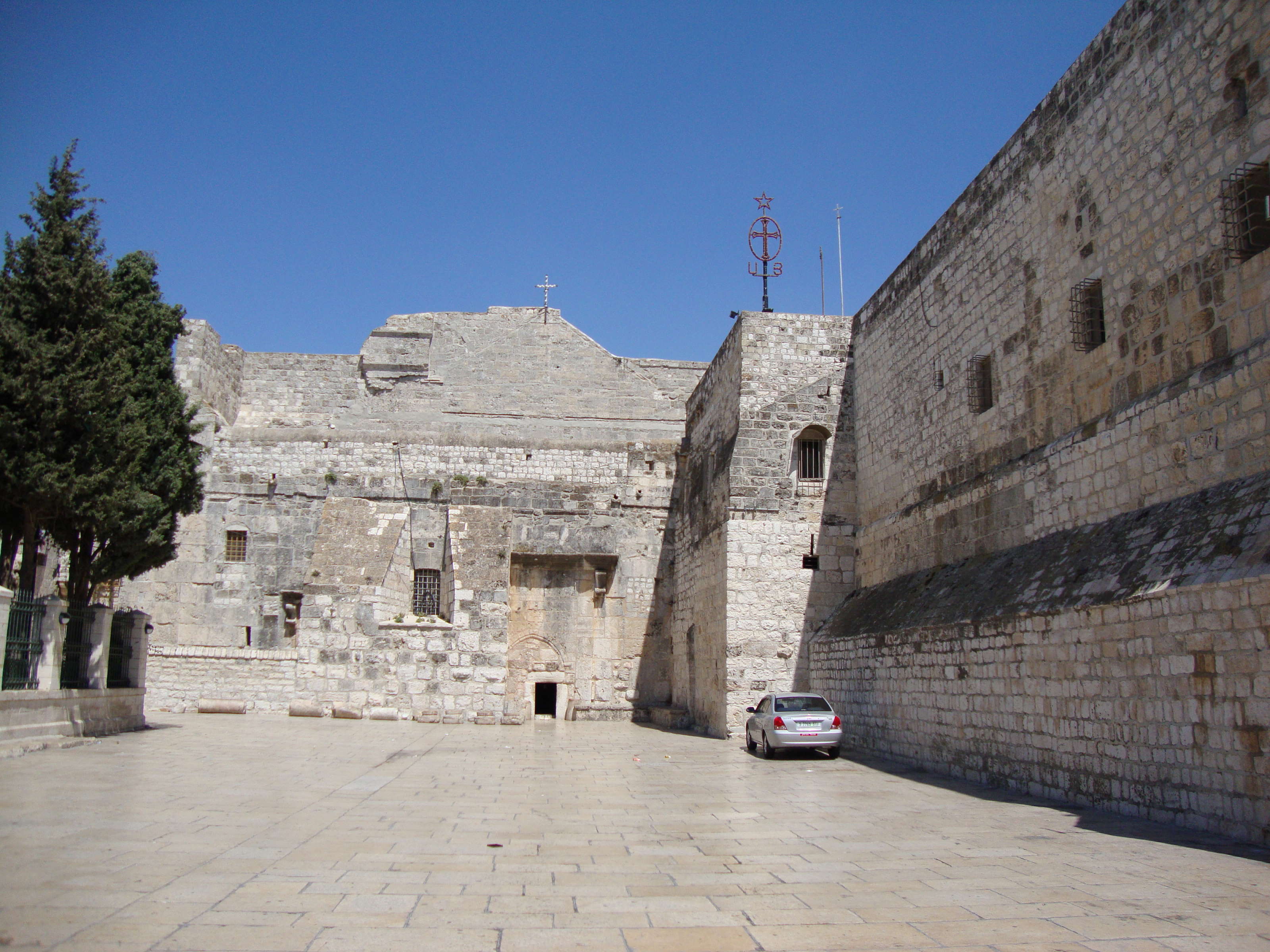
Generic picture I found, as I didnt have a good shot of the front of the church, note, its probably very rare that its this quiet!!

The door way opening to the church is very short for some reason, odd for the importance of this place and considering how big it is inside.   Going in, and it looks fairly similar to a number of other church like the Church of Ascension in Jerusalem, large pictures of Jesus, Mary and the Apostles in big gaudy guilded frames, all types of candlesticks, and various other typical church decorations.

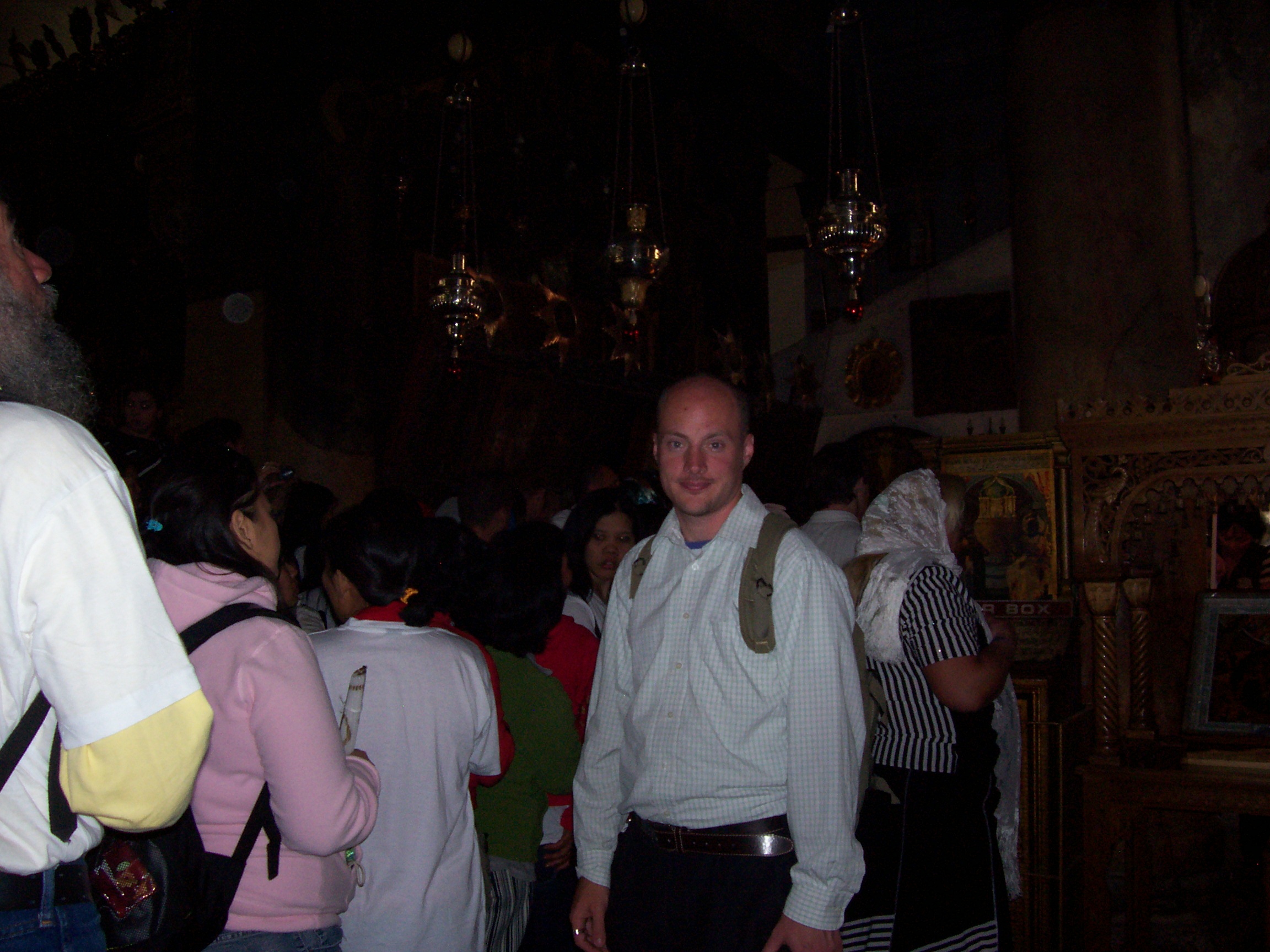
There were people lined up in a queue for something, I wasn’t sure what.   I decided to join in with the rest of our party, I was guessing the trip to the actual grotto would outside somewhere a bit later.   Therefore this queue was a bit of a mystery what I was in for.  Queuing of course, I use the term loosely as its more like funnelling people into a tight space down some steps into another small doorway.

I suppose a grotto wherever this term came from would be an accurate phrase, its normally something associated with Santa Claus’s domain, but as anyone who grew up as a small child who visited a Father Christmas in a department store you would go into a cave like place, queuing often for a long time.    Easy comparison really.

Once in the narrow cave like corridor that was under the church floor, people were crowded around something but one of the staff of the church was trying to get people to move around away from it, ie: you could not block the main passage way.

So here it is, there is the place were Jesus was most likely to be born in a manger at the stable by the inn in Bethlehem.

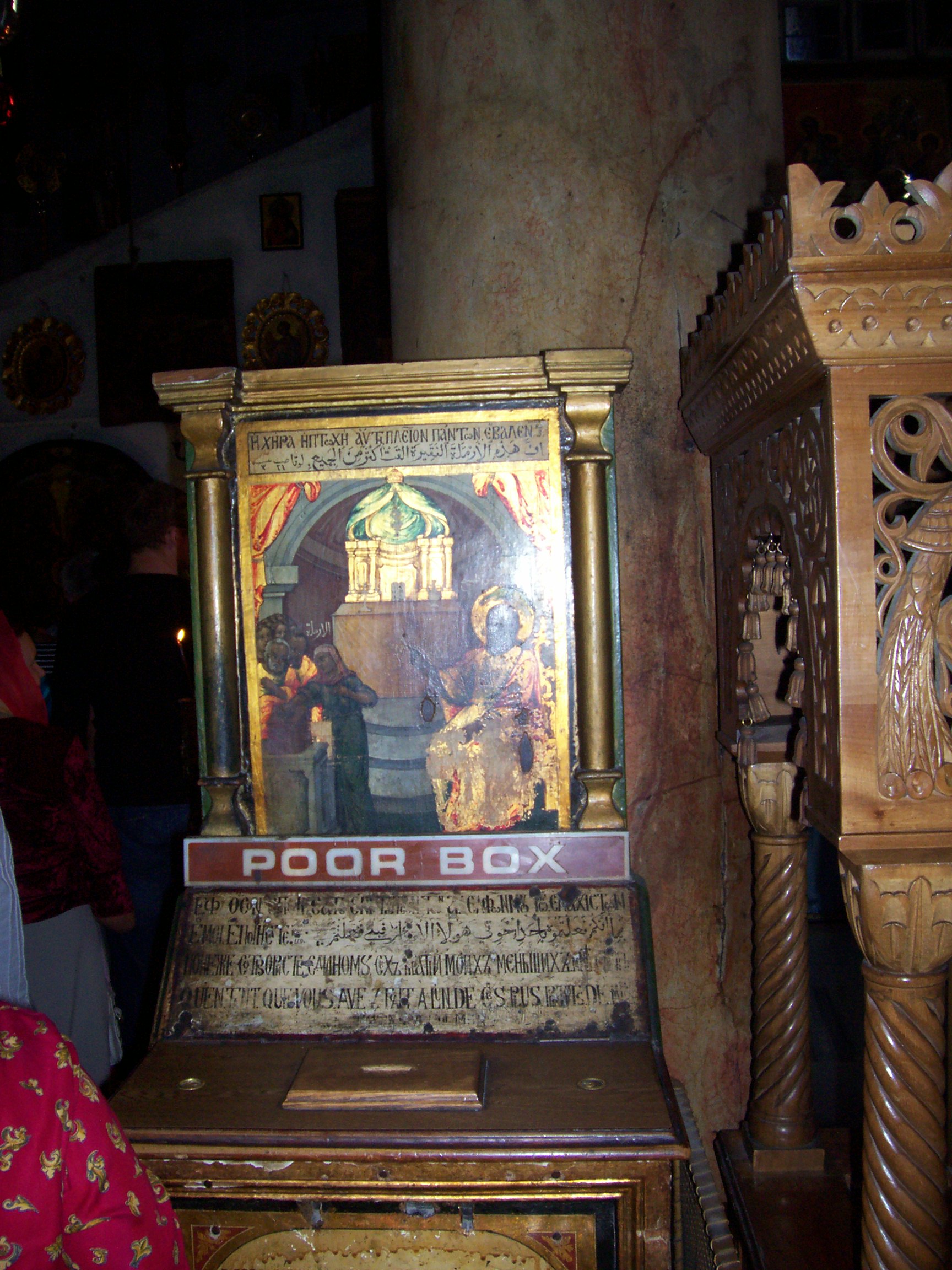
Below the archway in the picture is a tiny gap, a small shrine where the expected place our Lord was born was.

On the right here, you can see they have made the shrine very small, it just looks horribly artificial.

The story of the nativity tells us about Christ’s birth in a simple place, a stable, not the place you would expect a king to have been born, however the masses of decoration and clutter around the place does spoil it, I was hoping to see a simple stable but the church structure and decorations have been built over it, somehow taking away the simple notion of a place our Lord came to this world.   A bit disappointing really.   Its kind of like a waiting ages in a restaurant for a nice meal and then your food arrives, but someone’s added every type of sauce and condiment to it making a bit a mess.

Before going home through to the border, our tour guide, a Palestinian Christian invited us to meet his family at his house for dinner, yes about 30 people!  We had some big platters of chicken, plenty of vegetables and heaps of rice, all of us were crammed into this first floor flat not that far away from the main part of Bethlehem city square.

I did feel sorry for the fact that Christian Palestinians don’t get the ability to travel easily through the borders easily and it is easy to see why they blame Israel for that, however given the very real threat of terrorism, the borders have to be tightly controlled, and there isn’t much you can do.  It was nice that the tour guide invited us for dinner and to meet his family, there was a chance to visit his family’s shop underneath but as this had some simple cheap souvenirs like olive wood crosses and scented oils, it was clear that they were genuinely hospitable and not really after our money.

On the whole I really enjoyed this trip, any chance to see the places Jesus lived is exciting, Nazareth is high up on my to do list now!!

Parts 1 / 2 / 3 / 4 / 5

Bethlehem – journey to birthplace of Christ part IV – pictures around town

Parts 1 / 2 / 3 / 4 / 5

Almost to the end of my serialised guide on Bethlehem, here are some pictures:-

Very small man begging outside one of the tourist places in Bethlehem, hes on a small bike as a sort of wheelchair as he has some kind of disability.

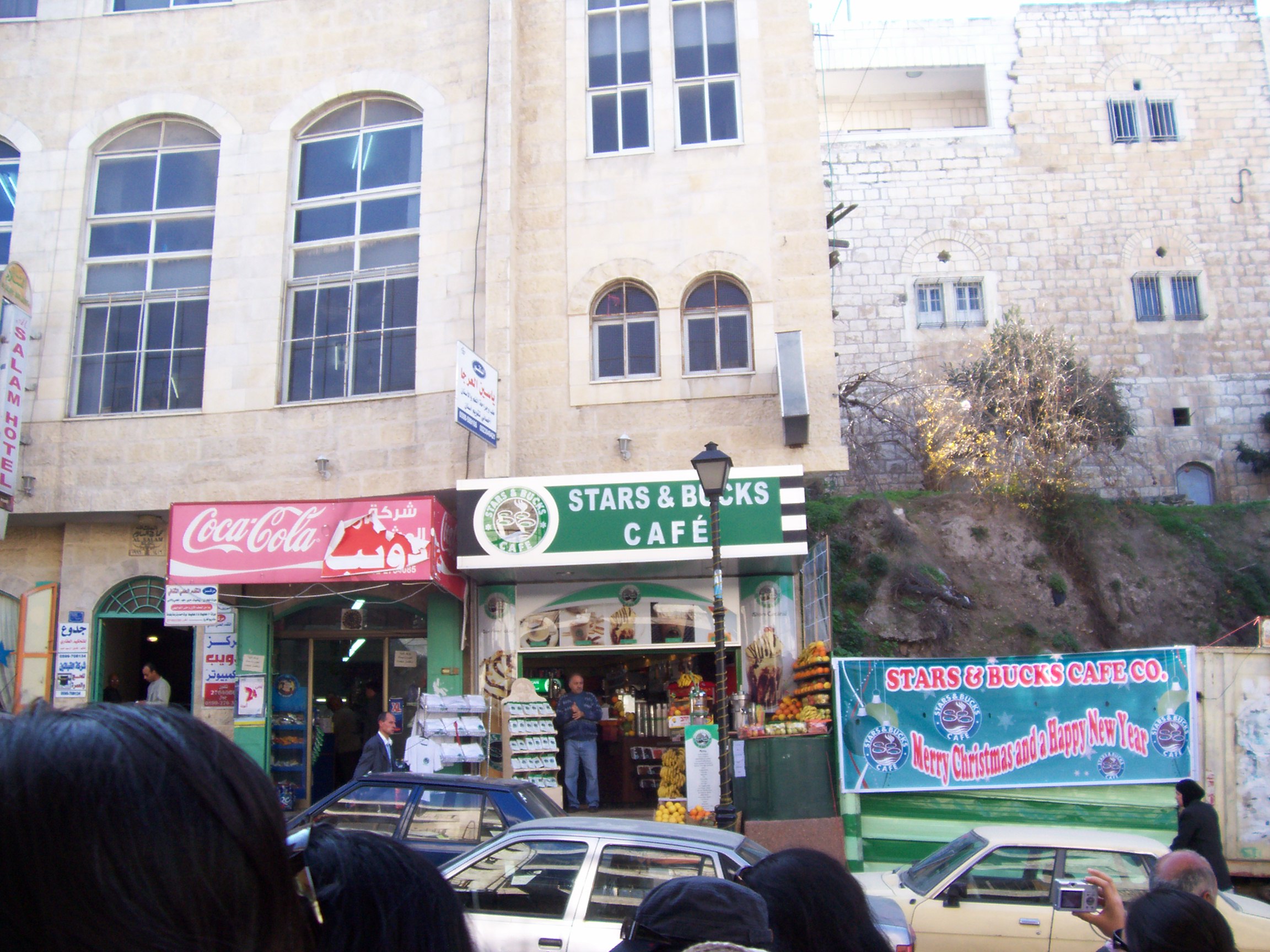
Blatant rip off of a well known international coffee shop, this one is called Stars & Bucks.

By the border on the way back to Jerusalem through the security gate on the concrete wall

Parts 1 / 2 / 3 / 4 / 5